


Two suppliers can quote the same price for "the same" heating film and deliver products that fail at very different rates. The film is a laminated assembly - substrate, conductive layer, busbars, adhesive, insulation - and almost none of that is visible in a quotation or a photograph. What you are really choosing is a manufacturing organisation, not a part number.
This checklist is written to be run in a single call or a short visit. Each of the ten checks asks for an artefact rather than an assurance, because assurances are free and artefacts are not.
Five of the ten checks eliminate most unsuitable suppliers on their own:
If a supplier fails any of these five, stop. The other five are worth discussing only once these are answered.
Four rules make the difference between a checklist that works and one that produces polite fiction.
Ask for artefacts, not assurances. "We have strict quality control" is not an answer. "Here is the test record for your production batch" is.
Have them answer in writing. A supplier who will put a resistance figure and a lead time in an email is accountable for them. A supplier who will only say it on a call is not.
Treat a well-argued "no" as a green flag. The most useful sentence you can hear is "this is outside what we do well." It costs a supplier revenue to say it, which is exactly why it is informative.
Run it in order. The ten checks are sequenced: screen (1-2), verify (3-5), test (6-7), commit (8-10). You should rarely reach check eight with more than two suppliers left.
Figure 1 — Ten checks in four stages. Each stage has a gate; most projects reach stage four with two suppliers left.
This matters more than any other single question, and it is the one most buyers get wrong - usually by accepting a photo gallery as evidence.
Why it matters. The organisation that runs the lamination controls the process variables that decide your failure rate: adhesive selection, lamination temperature and pressure, cure time, busbar attachment. If your supplier does not run that line, then every process change - a new adhesive vendor, a cheaper substrate batch - happens at a party you never speak to and cannot audit.
How to check it. Do not ask "are you a factory?", because the answer is always yes. Instead:
Red flag: a factory gallery with no people, no date and no production context in it. Real plants photograph messily.
A heating film is a construction, not a material. If a supplier cannot describe the construction, they are repackaging someone else's work - and they will not be able to fix it when it goes wrong.
If the layer stack is new to you, our guide to what a far-infrared heating film is and how it works walks through it in detail.
What to ask for.
Why it matters. The substrate and the adhesive are where field failures originate, and both are invisible in a quotation. A supplier who cannot name them cannot guarantee anything about them.
Red flag: "graphene" offered as the complete technical answer. A real supplier will answer a follow-up such as "graphene nanoplatelets or reduced graphene oxide, dispersed in what binder, on which substrate?" without leaving the room. If that question produces a brochure, you have your answer.
If you change one thing as a result of this article, change this one. It is the check that most directly moves your return rate.
Why sampling fails specifically here. Statistical sampling plans - AQL and its relatives - are designed to catch defect rates in a population. They make a reasonable trade when defects are randomly distributed and a bad unit is merely bad. Heating elements do not behave that way. They fail locally: one poorly crimped busbar, one delaminated corner, one trace interrupted by a fold. A sample of five units out of five hundred will miss a one-percent local defect rate more often than it catches it - and the units it misses ship to customers.
Figure 2 — Sampling controls the defect rate; it does not tell you whether your unit was measured. Same batch, same three local defects.
What to ask.
The tell. A supplier who answers this question with "we follow AQL 2.5" has answered a different question than the one that matters. AQL tells you how many defects they are willing to accept. It does not tell you whether your unit was measured.
Note on cost. 100% electrical test adds labour and equipment to every unit. That cost is real, and it is usually visible in a quotation as a slightly higher unit price. The comparison that matters is not unit price against unit price; it is landed cost including field returns, replacement freight and the review score you take when a heated product fails in use.
Samples are cheap to make well. A hand-built sample assembled on a bench by an engineer says nothing at all about what a production line will do with the same drawing.
What to ask.
A detail worth insisting on. Ask for the sample with its measurement record - resistance, power at rated voltage, and the test conditions. A sample without data tells you the supplier can build one unit. A sample with data tells you they can measure, and that they expect you to check.
Note on what a sample cannot tell you. A sample cannot tell you about seam quality after twenty wash cycles, adhesive ageing, or the consistency of the next five hundred units. Those require either a production-run sample or a test protocol - see check ten.
Every factory claims to have a quality system. The useful question is whether they can describe their own process concretely enough that you can locate your risk inside it.
What to ask for.
Why the outsourced-step answer matters. If lamination is outsourced, your delamination risk is outside the supplier's control. If connector moulding is outsourced, your connector-sealing risk is. It is perfectly normal for parts of the process to be outsourced - battery packs, for instance, are usually sourced from specialist suppliers rather than built by a heating-element manufacturer. The problem is never the outsourced step itself. It is not knowing which step it is.
This is the most useful test in the whole checklist, because it cannot be passed with better marketing - only with engineering.
Give them five inputs: what the product is, the available heated area in millimetres, the supply voltage, the target surface temperature or wattage, and how the product will be used.
Ask them to return four outputs:
Why it is decisive. Those four outputs follow from each other. Resistance follows from power and voltage. Current follows from voltage and resistance. Trace geometry follows from the resistance you need across the area you have. A supplier who returns a coherent set has done the design. A supplier who returns a price and "no problem, we can do it" has quoted, not designed - and you will discover the difference at the sample stage, or later.
One follow-up that separates the two groups. Ask "what happens to the power draw as the element heats up?" The answer depends on the sign of the element's temperature coefficient, and it is the mechanism that decides whether your product needs active control or can be allowed to self-stabilise.
This is worth separating from check six, because it is where a lot of projects quietly go wrong.
A film specified at 12 V is not interchangeable with a 5 V or a 24 V version of the "same" product. At lower voltage, the same wattage requires a lower resistance: a shorter current path, a wider or thicker trace, or a different sheet resistance. And as voltage falls, current rises for the same power - and current is what sizes your wiring, your connector and your battery.
The question to ask: "At my supply voltage, what resistance does the element need, and what current will the harness carry?"
If they cannot state both, the design has not been done. If they answer "any voltage is fine, same film", the design has not been understood.
The consequence at the extremes. A design that works well at 36 V will not simply rerun at 3.7 V or 5 V, and the reason is current. A 10 W element draws about 2.7 A at 3.7 V and about 0.28 A at 36 V - roughly a tenfold spread from the same wattage. At the low end, the voltage drop along the harness becomes a meaningful fraction of the supply, the busbar and trace resistance stop being negligible, and the connector starts to matter as a heat source rather than a detail. These are solvable problems, but only by someone who has recognised them as problems.
A note on product ranges. A manufacturer who builds across a range of standard DC supplies - 3.7 V, 5 V, 12 V, 24 V, 36 V and the battery architectures behind them - can size the element to the supply you already have. That is a different service from being handed one film and told to redesign your battery pack around it.
Commercial terms are not a formality; the exclusions are where projects lose money.
Ask explicitly, and ask in writing:
Where the money actually hides in this category. Custom-shape tooling, and packaging specification. Both are frequently assumed to be included and neither usually is. Ask for the two lines explicitly rather than discovering them on the invoice.
Three separate questions that buyers conflate into one, usually to their cost.
Tooling ownership. If you paid for a cutting die, screen or forming tool, is ownership documented and can it be transferred? Ask what happens to it if you move suppliers - and whether you would receive it or a credit.
Confidentiality. Is there a mutual NDA, and does it cover drawings and formulations, not just pricing? A pricing-only NDA leaves your heating-zone design unprotected, and in this category the layout is often the most valuable thing you have.
Exclusivity. Will they build the same design for a competitor? Most suppliers in this category will not sign exclusivity, because their business model is building the same construction for many customers. That is a legitimate position - but you should know which one you are buying. Some will agree to design exclusivity for a committed volume; ask what volume.
The closing question. "If this project ends, what happens to our drawings, samples and tooling?" The answer tells you whether you are dealing with a partner or a capacity booking.
This is the check buyers most often skip, and it is the one that determines how expensive a defect becomes.
What to ask.
The question that tests it properly: "If I send this unit back in six months, what can you tell me about it?"
A supplier with batch record-keeping will answer with a specific process - the batch number, the production date, the test record for that run. A supplier without it will answer with a policy. Policies do not identify which batch shipped.
Certification belongs in a different category from the ten checks above, and buyers regularly confuse the two. Supplier quality tells you whether the product was built consistently. Certification tells you whether the design satisfies a specific standard for a specific market. A supplier can be excellent at the first and have no certification at all for your market.
What to ask, and why the obvious version of the question fails.
One caveat worth stating plainly. For products that heat the human body, the relevant standard family is not optional, and a declaration with no supporting test data is not compliance - it is a statement of intent. If you are exporting to the EU, the US or the UK, confirm which standard the design targets before tooling, because retrofitting a design into a standard is far more expensive than designing into it.
Each of these is cheap for a supplier to fix and expensive for you to discover later. That asymmetry is the point.
All four cost the supplier something to say. That is why they are worth more than a longer list of assurances.
Score each check 0 / 1 / 2:
Reading the total:
| Score | Interpretation | Action |
| Below 12 | Not enough visibility to commit tooling | Do not place a tooling order. Ask for the missing artefacts; if the same answers come back, move on. |
| 12–15 | Workable, with gaps | Proceed to a production-run sample before tooling, and require the test record with it. |
| 16–20 | Strong | Proceed, and negotiate the sample-to-production acceptance criteria in writing. |
Two checks carry disproportionate weight. Check 1 (factory or reseller) is the fastest disqualifier, because it cannot be fixed later. Check 3 (inspection method) is the highest-value one, because it is the only check that changes your failure rate directly.
For transparency, here is how we answer the same list. We have marked where the answer is a commercial term rather than a manufacturing fact, because those genuinely do change with part size and volume.
| # | Check | Our answer |
| 1 | Factory or reseller | Factory. Dongguan, Guangdong. Roughly 3,000 m² of production floor, around 100 staff and approximately 30 machines. Lamination is in-house. |
| 2 | Who owns the formulation | We do. Both element families are produced here - graphene-based heating films as the main line, and metal-wire elements where the application genuinely calls for them. Substrate, conductive system and encapsulation are specified per project. |
| 3 | Sampling or 100% inspection | Finished flexible heating elements are inspected 100%, not accepted on an AQL sample. In this category the failures that matter are local, and a sample plan is designed to miss them. The inspection record for your production batch is available on request - not a certificate, the record. |
| 4 | What the sample proves | Standard samples typically ship in 1–3 days; OEM development runs 7–10 days from an approved drawing. Samples are supplied with their measurement data. |
| 5 | The process | A 15-step production process with documented stages, from substrate preparation through lamination, electrical test and final inspection. Lamination and element production are in-house, and electrical test is in-house. Battery packs are not built here - they are sourced from specialist suppliers, and the pack specification is fixed per project. |
| 6 | Can they size an element | Yes - from your area, supply voltage, target temperature and use case. Resistance, current, trace geometry and temperature-limiting method are returned as a set. |
| 7 | Design for your voltage | Films are built for 3.7 V, 5 V, 12 V, 24 V and 36 V supplies and matched to your power architecture, rather than one film offered for every voltage. The 3.7 V and 5 V end of that range is where current, trace geometry and connector resistance decide whether the design works. |
| 8 | Commercial terms | Quoted per project - MOQ, tooling, price validity and lead time all move with part size, shape and volume. We put them in writing with the quotation rather than publishing a number that would be wrong for your part. |
| 9 | Tooling and IP | Tooling ownership and NDA terms are agreed per project and documented. Ask us for the position on your specific design. |
| 10 | After delivery | Batch traceability and the after-sales process are set out with the quotation, so the commitment is on paper before the order rather than after the defect. |
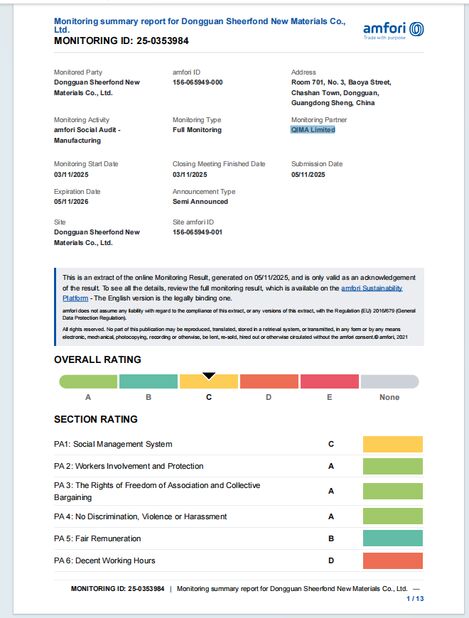
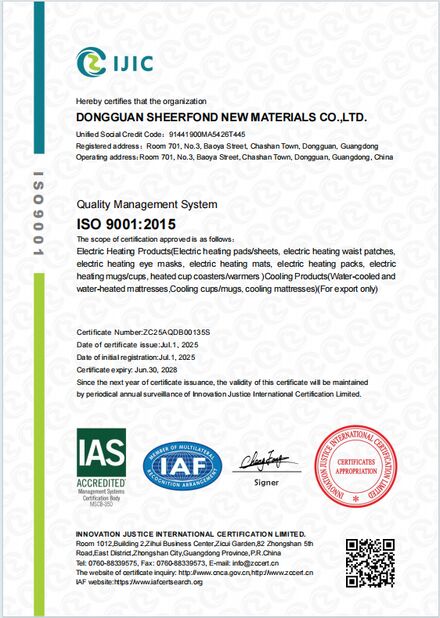
Two things we will not do: claim a certification we cannot evidence with a certificate that names the product, and quote a technical parameter we have not measured. If you need either, ask us and we will tell you what we have.
Request a free sample or send your drawing
How many suppliers should I shortlist?
Three or four. The point of a shortlist is comparability, not coverage: the same ten questions asked the same way will usually produce one clearly better answer and one that disqualifies itself. Running twenty suppliers through a checklist tells you less than running four properly.
Is a trading company always worse?
No. A good trading company can add real value in logistics, documentation and order management, and some are better organised than the factories they buy from. The problem is not the trading model - it is a trading company presenting itself as a factory. If your process control decisions are made by a party you cannot reach, that is the risk, whoever signs the invoice.
Do I need to visit the factory?
Not to screen - a live video walk plus the artefacts above will eliminate most unsuitable suppliers. Do visit before you commit to tooling, because a walk-through is the fastest way to see whether the process described on paper matches a line that actually runs.
What is a reasonable sample fee?
Fees vary widely with element complexity, and a free sample is not automatically a good sign - it may mean a hand-built unit with no production relevance. What matters is whether the fee is credited against the order, whether you receive the measurement data, and whether the sample came from a production run.
What if a supplier refuses to sign an NDA?
Then your heating-zone layout and drawings are unprotected, and in this category the layout is often the most valuable asset you have. A supplier who will not sign a mutual NDA is telling you something about how they treat the next customer's drawings too. Treat it as a disqualifier for any project with a custom design.
Can a supplier be both OEM and ODM?
Yes, and most in this category are. The distinction matters at the start of a project: OEM means you bring the design, ODM means they develop the heating zone for you. What you want to establish early is who is responsible for the thermal design - because if the answer is "the drawing was supplied", then a performance shortfall is yours to resolve.
Which standard applies to a heated garment or pad?
For products that heat the human body, IEC 60335-2-17 covers flexible appliances including DC and battery-operated products, with specific requirements for clothing in a normative annex. Your target market may add national requirements on top. Confirm the applicable standard and edition with your certification body before tooling.
The fastest way to get a useful answer is to send the five inputs from check six: what the product is, the available heated area, the supply voltage, the target surface temperature, and how the product is used. With those, a manufacturer can tell you whether the element is feasible at your voltage and area, what the required resistance and current would be, and what a sample would look like.
If the numbers do not work, you will hear that before you have paid for tooling - which is the entire point of running this checklist early.
Contact Person: Masum Billah
Tel: +8616620605160
USB Graphene Electric Heated Pad Sleeping Bag For Camping 195×75cm Size
Leather Electric Heating Desk Pad With 45degrees Temperature Sheerfond
61cm Width Electric Sleeping Bag Liner , Self Heating Sleeping Bag With 5V 2A Power
SHEERFOND Electric Pet Heating Pad , Pet Warming Mat For Dogs And Cats
Smart Electric Beverage Warmer OEM , Coffee Cup Heater 140-149Fahrenheit Temperature
Waterproof Lunch Box Warmer Heater Bag Oxford Cloth PVC Material OEM
Graphene Heating Sheet Wrist Warmer Wrist Guard Hand Heating Pad For Wrist Brace


