


A water-cooled and heated sleeping bag is three components working as one loop: a control unit that conditions the water, a sleeping bag that the water circulates through, and a corrugated hose that joins them. The unit runs either a cooling mode or a heating mode, and the same bag is used for both.
That is the whole idea, and it solves a problem that ordinary sleeping bags cannot. A bag is rated for a temperature band: too warm a bag is unbearable in summer, too light a bag is cold in winter, and a camper ends up owning two. A water loop moves heat in either direction, so one bag covers the range.
An electric heating element inside a sleeping bag adds heat and nothing else. If the night is warm, the element is simply switched off, and the bag goes back to being a bag that is too warm.
Water does something an element cannot: the same loop that carries warmth in can carry heat out. The unit conditions the water, the water moves through the bag, and the bag's surface follows the water rather than the weather.
Two practical consequences follow. The control unit is outside the bag, so the bag itself stays light, washable in the ordinary way a bag is, and free of batteries near the body. And the hose is detachable, so the bag can be used, packed and stored like any other sleeping bag.
The product diagram names the three components plainly, and it is worth using exactly that vocabulary.
| Component | What it is |
| Control unit | The box that conditions the water. It has a top control panel and a carry handle, and a vented side |
| Sleeping bag | A textile-surface bag with a zippered edge, which is what the water loop runs through |
| Connection hose | A corrugated sleeve with a hose connector, joining the unit to the bag |
One hose, one connector, one loop. The unit stands on the floor beside the bag rather than being carried inside it, which is what keeps the bag thin.
The system offers water cooling and water heating, and the diagrams label them as cooling mode and heating mode. You run one or the other.
The reference visuals show a blue wash for cooling and an orange wash for heating across the bag. It is worth being explicit about what those colours are: they are an illustration of the mode, not a thermal image. No camera recorded a temperature gradient; the artwork says so itself, and anyone who presents that kind of picture as measured data is showing you a rendering.
The same applies to the circulation arrows. They show the concept of a loop. The actual routing — which end of the bag the water enters, how it travels inside — is confirmed against the approved sample rather than assumed from a diagram.
The unit is a tall black case with a flat top. Three features matter on it.
The top control panel puts the cooling and heating controls on the upper face, where you can reach them from a sleeping position without kneeling down. The carry handle is what makes it a portable appliance rather than a fixture — it moves from the van to the tent to the spare room. The vented side is the one to remember: the unit conditions water and rejects heat, so it needs air. Covering it, or pushing it into the bag, is the single easiest way to make it work badly.
The corrugated hose is stiff enough to hold its shape and flexible enough to be routed around a sleeping mat. Corrugation also protects the inner tube from being crushed where the hose passes under something.
The control configuration is confirmed against the approved sample. We do not publish a button map here, because the panel layout is one of the items that varies between programmes.
The bag is a textile surface with a zippered edge. That sounds plain, and it is meant to: the interesting engineering is in the loop, not in the fabric.
What the textile surface has to do is transfer heat between the water and the body without feeling like a plastic sheet, and survive being folded and rolled between trips. The zippered edge is what makes the bag a bag rather than a mat — you can close it, and you have to be able to open it easily in the dark.
There is a small pillow or pocket at the head end in the reference images. Fabric composition, filling and the exact construction are confirmed on the approved sample, because those are the parts most likely to be specified per market.
The reference scenes are a tent on a campsite and an indoor rest space, and those are the two honest use cases.
Outdoors, the system's advantage is that it does not care what the air temperature does overnight — you set the mode and the bag holds its condition. The unit sits on the tent floor beside you, and the hose runs along the mat.
Indoors, the same system does something different: it turns a spare bed, a sofa bed or a floor mat into a temperature-controlled place to sleep, without buying a second appliance. That is why the reference material calls it a sleep system rather than a sleeping bag.
Both sets of images are labelled application illustrations. They show the arrangement, not a measured result.
A water loop plus an electrical unit plus a person asleep is a combination that deserves plain rules.
This product is not a medical device. It is not intended to diagnose, treat, cure or prevent any disease, and it makes no claim about sleep quality, circulation, pain or any other condition. It changes the temperature of a surface you sleep on.
| Category | What can be set |
| Bag design | Reference material shows three design directions |
| Colour and branding | Reference swatches plus branding options |
| Private label | Your branding on the system |
| Packaging | Custom packaging |
| Configuration | Cooling and heating modes, at the main unit |
The reference artwork labels the design, colour and packaging options as concepts, subject to the confirmed sample. That is the honest status: they are directions a programme can take, not a fixed catalogue with part numbers.
OEM and ODM describe the project enquiry route. The available options and the supplied-item list are confirmed against the approved sample and the confirmed order.
A short list of what is deliberately absent from this page:
We would rather hand you a sample, a drawing and a written specification than a headline number that will not survive a buyer's compliance review. If a figure is a hard requirement for your programme, raise it at the design stage and it becomes a defined, testable specification.
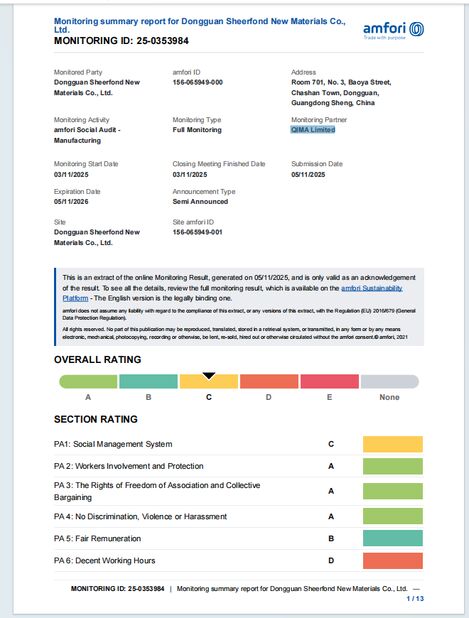
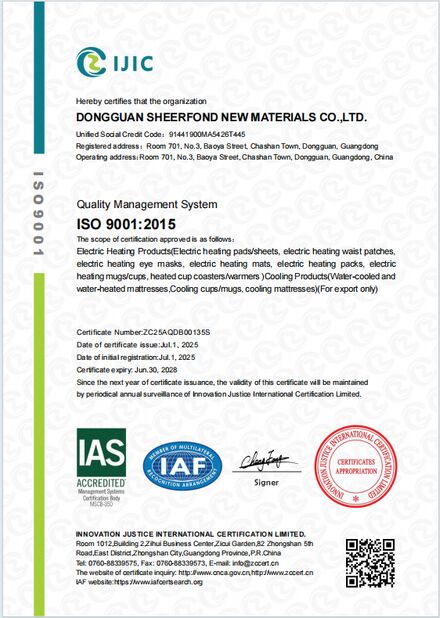
Dongguan Sheerfond New Material Co., Ltd. develops and manufactures far-infrared and graphene heating materials, and designs thermal systems built around them — in both directions. Our low-voltage heating range covers 3.7 V, 5 V, 12 V, 24 V and 36 V architectures, and our cooling programmes apply the same principle in reverse: moving heat out of a surface or a volume rather than into it. This sleep system is a water-based programme in that second family.
Products are manufactured against project specifications with batch inspection records.
Send us the market, the sleep configuration you are planning, the bag design direction and colourways, your branding and packaging requirements, and your target quantity. If you need the system to match an existing sleep range, send the dimensions and we will work from those.
Price indication: quoted per project, because the unit specification, bag design, branding and order size all move the number.
Contact us: Request a quotation →
How does a water-cooled sleeping bag work?
A control unit conditions the water, a hose carries it to the bag, and the bag's surface follows the water temperature. The same loop runs in reverse for heating.
Can it heat and cool at the same time?
No. Cooling mode and heating mode are alternatives, chosen at the main unit.
Do I need to fill it with ice?
The reference material describes a water-based loop with a control unit. How the unit reaches its cooling condition is part of the unit's specification, which is confirmed per project.
Is the bag washable?
The hose detaches and the bag is an ordinary textile bag. Wash it to the care label of your approved sample.
How cold or warm does it get?
We do not publish a temperature figure. It depends on the unit, the water volume, the ambient temperature and the run time.
Can it be used indoors?
Yes — the reference material shows both a campsite and an indoor rest space. The unit needs ventilation in either case.
Is it safe to sleep with it running?
Follow the safety notes above: keep the unit ventilated, route the hose clear, do not leave it running unattended for long periods, and stop at once if you see water where it should not be.
This product is not a medical device and is not intended to diagnose, treat, cure or prevent any disease. It changes the temperature of a sleeping surface only, and makes no claim about sleep quality, circulation, pain or any other condition. It is not a life-safety or survival device and must not be relied on to prevent hypothermia. Keep the control unit ventilated and uncovered; route the hose clear of the body and of anything that could crush it; do not run the system unattended for long periods; stop immediately if water leaks; not for unsupervised use by children. Temperature, voltage, power, water capacity, dimensions, control configuration, hose routing and certification status are confirmed per project against the approved sample. Colour overlays in the reference artwork are mode illustrations, not thermal imaging.
Contact Person: Masum Billah
Tel: +8616620605160
USB Graphene Electric Heated Pad Sleeping Bag For Camping 195×75cm Size
Leather Electric Heating Desk Pad With 45degrees Temperature Sheerfond
61cm Width Electric Sleeping Bag Liner , Self Heating Sleeping Bag With 5V 2A Power
SHEERFOND Electric Pet Heating Pad , Pet Warming Mat For Dogs And Cats
Smart Electric Beverage Warmer OEM , Coffee Cup Heater 140-149Fahrenheit Temperature
Waterproof Lunch Box Warmer Heater Bag Oxford Cloth PVC Material OEM
Graphene Heating Sheet Wrist Warmer Wrist Guard Hand Heating Pad For Wrist Brace


